
Key Takeaways
- PAS Framework: Scuffed stairs are an eyesore and safety risk; precision detailing with tradesmen-grade machinery is the only path to a high-end restoration.
- Safety First: Staircases require higher slip-resistance than flat floors; Bona Traffic HD Anti-Slip is essential for family safety.
- Advanced Detailing: Festool delta sanders and corner tools are required to restore intricate spindles and treads without damaging adjacent walls.
- Moisture Management: Staircases in UK hallways are prone to humidity swings; ensuring stable moisture content is vital before sealing.
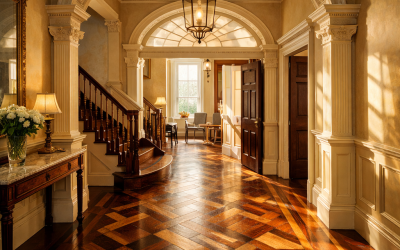
The staircase is often the architectural centerpiece of a British home, yet it is frequently the most neglected timber surface. Whether it’s a grand Victorian sweeping flight in a Sussex coastal property or a modern oak installation in a London townhouse, the stairs endure the highest concentration of foot traffic in the building. However, the Problem is that staircase sanding is an incredibly labour-intensive and technically challenging task. Standard floor sanders are too large for the treads, and the corners, ‘noses’, and spindles require a level of precision that many general contractors simply cannot provide. Over time, the timber becomes rounded, stained, and aesthetically disconnected from the rest of the home.

The Hallway Agitation: Mess and Instability
The Agitation stage for a homeowner is the prospect of dust and disruption in the home’s main artery. Because stairs are located in the hallway, traditional sanding methods can send clouds of wood dust into every room in the house. Furthermore, if the sanding is not carried out with professional-grade detail machines, the result is often uneven treads and visible ‘orbital’ marks that are magnified once the finish is applied. Many DIY attempts result in damaged skirting boards or gouged timber ‘noses’—damage that is often irreversible without expensive heritage restoration board replacements. Safety is also a major agitation; an incorrectly finished staircase is a significant slip hazard, particularly for children and the elderly.
The Precision Solution: Technical Staircase Refinishing
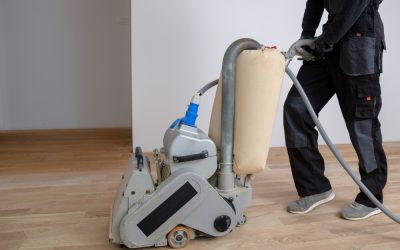
The Solution lies in a methodical, detail-oriented approach using the right tools for the job. Our wood floor restoration expertise extends to the most complex staircase designs. We replace bulky machinery with a fleet of Festool detail sanders and Bona Edge machines. This allows us to sand right into the corners of each tread and riser without leaving marks. The process is virtually dust-free, thanks to our HEPA-filtered vacuum systems that connect directly to the sanding heads. We begin by stripping old paint or varnish with 40-grit ceramic abrasives, followed by a meticulous progression to 120-grit for a tactile, smooth finish. For more on our technical machinery, see our guide on dust-free sanding technology.
Pro-Tip: Restoring the Spindles
One of the most difficult aspects of staircase refinishing is the restoration of turned spindles. Instead of aggressive sanding which can flatten the decorative curves, we use a combination of chemical stripping and hand-sanding with flexible abrasives. This ensures we preserve the heritage restoration value of the timber. Once the wood is bare, we apply a ‘grain raising’ preventative before finishing to ensure the spindles feel as smooth as they look. This is critical for preventing grain raising when using water-based products.

Non-Slip Finishing with Bona and Osmo
The final stage is the application of a high-performance finish. For staircases, we prioritize slip resistance and durability. Bona Traffic HD Anti-Slip is our preferred lacquer, as it provides a tough, clear film that protects against the heavy impact of footwear while ensuring a safe grip. If you prefer a more natural look, Osmo Hardwax Oil Anti-Slip is an excellent alternative, offering a breathable, matte finish that is easy to maintain. We always recommend a minimum of three coats on the treads to accommodate the intense wear. For advice on maintaining your new finish, read our timber longevity and aftercare guide.
Transform your hallway from a transit zone into a stunning feature. Visit our gallery to see recent staircase restorations in London and Sussex, or check our pricing for a competitive quote. Our specialist tradesmen are ready to provide a free consultation and site survey. We are a VAT-registered UK business dedicated to quality and reliability.
For high-authority technical advice on timber species used in UK staircases, visit the Timber Research and Development Association (TRADA).